
Last updated November 15, 2026
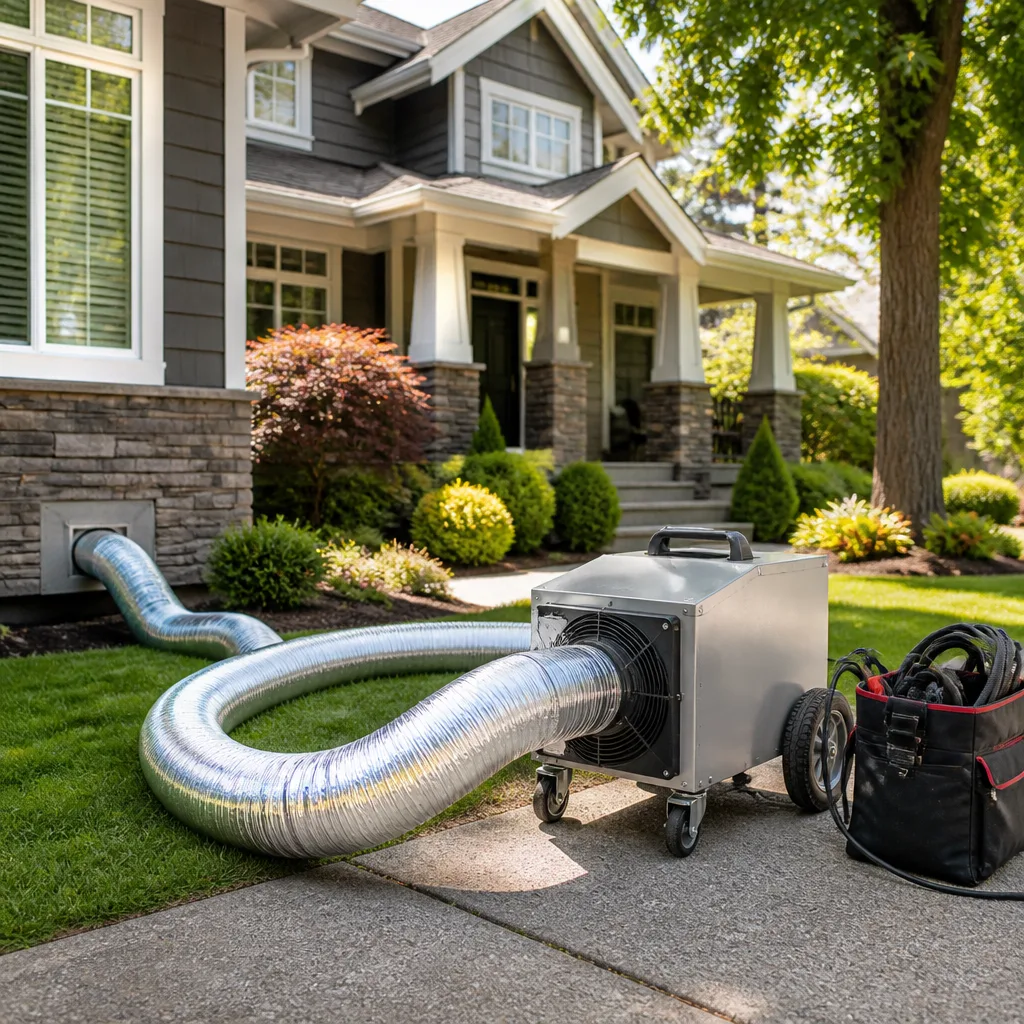 Whole-home duct cleaning
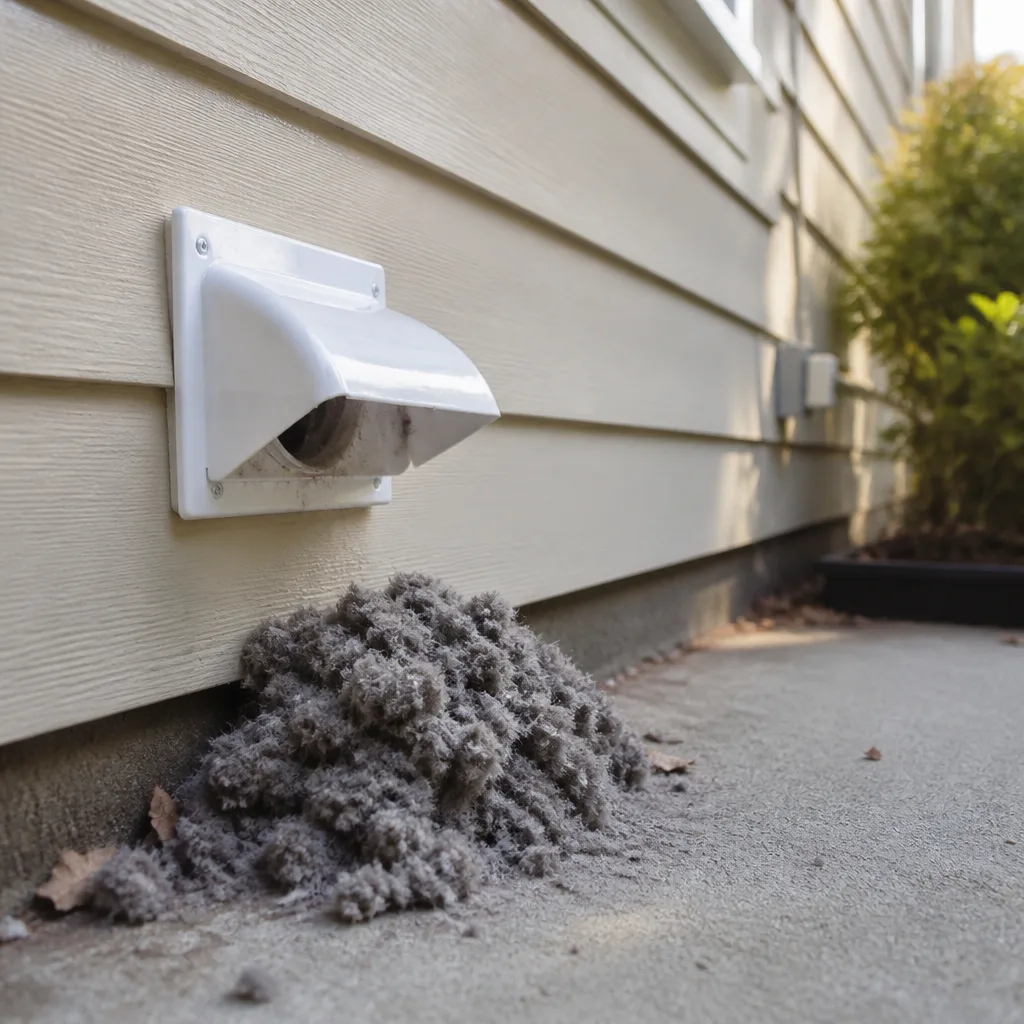 Dryer vent cleaning
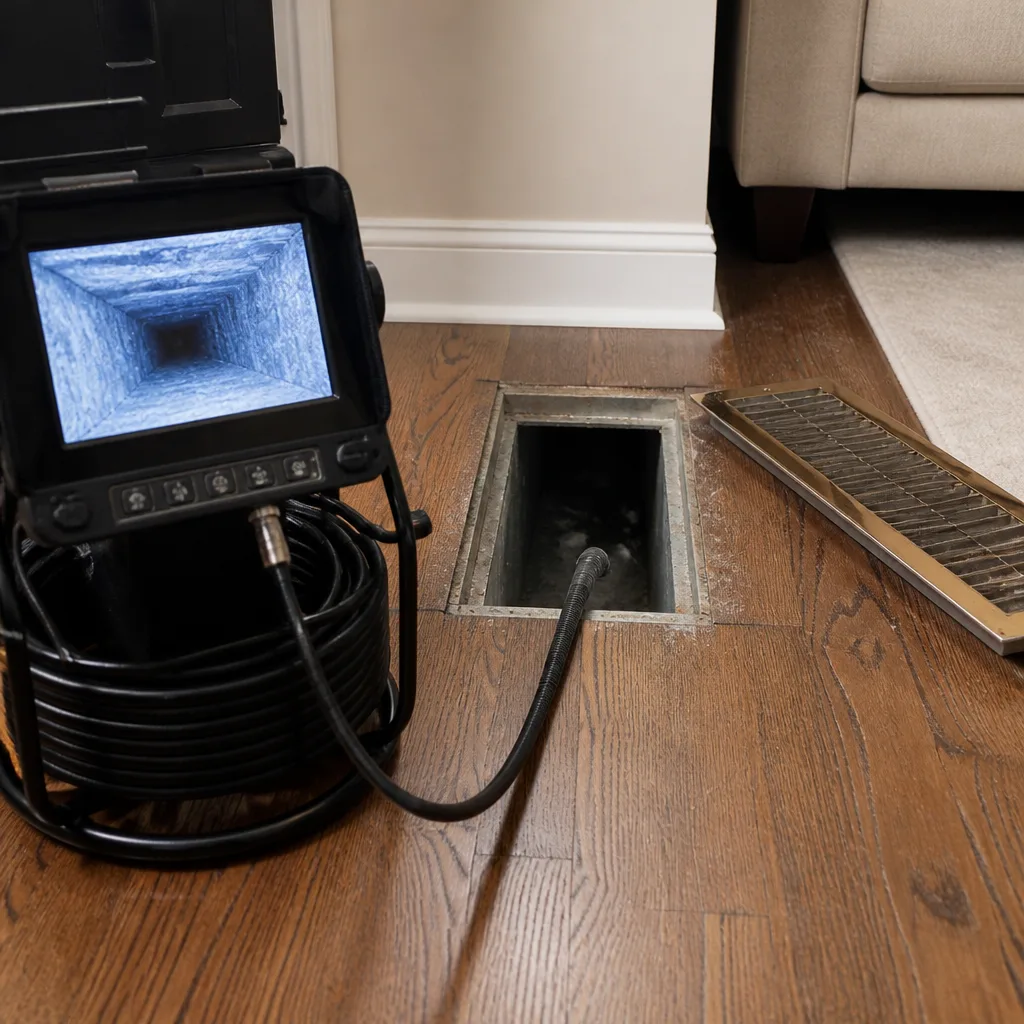 Camera inspection
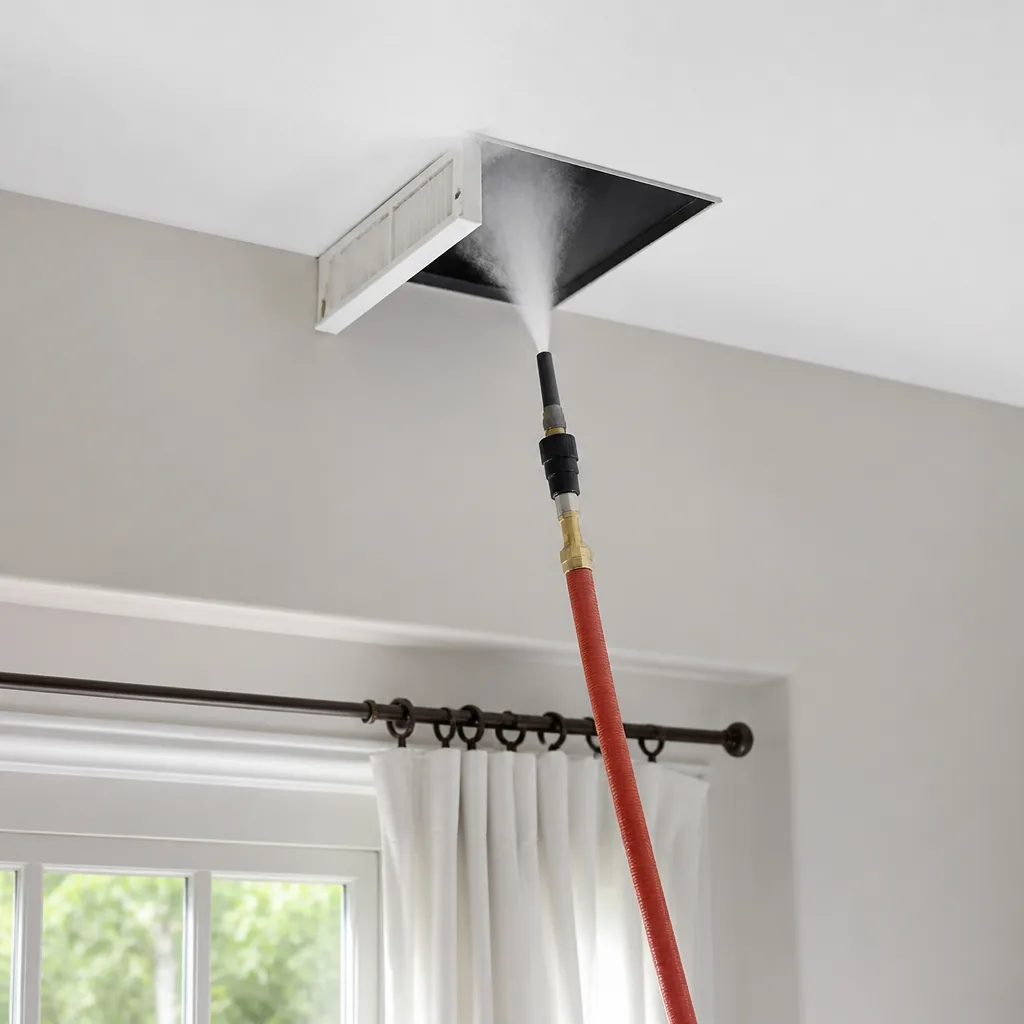 Sanitizing & deodorizing
Whole-system duct and dryer vent check with before-and-after photos - you see exactly what came out of your vents
That "$99 whole-house special" is a bait ad - the real number appears once they are in your hallway, or the "clean" is a shop-vac at the register. We photograph the inside of your ducts before and after instead.
Air Duct Cleaning Warning Signs: A Wilmington Homeowner’s Reference Guide
Visible dust on a register grille is almost never a sign of an urgent problem. A musty smell that fades within ten minutes of the system starting up actually is. Most advice online treats those two signals with the same alarm or the same shrug, and that’s a problem. One is cosmetic accumulation you can watch for months. The other points to active biological growth somewhere in the ductwork that should be evaluated soon. This guide ties each warning sign to its underlying cause so you know whether to monitor the situation or pick up the phone. We’ll cover what dark streaking around supply registers means in Wilmington’s humid climate, why certain rooms never cool the way they should, and the utility bill pattern that signals duct leakage.
Quick Answer
The main warning signs that air ducts need professional attention in Wilmington are musty or earthy odors that appear when the system starts, visible dark streaking around supply registers, uneven room temperatures that persist after HVAC servicing, and unexplained jumps in cooling costs during humid months. Surface dust around a grille is usually a filter or housekeeping issue, not a duct failure. Urgency depends on the type of sign and how long it has been present, with odor and occupant health concerns ranking highest.
Styles & brands we work with
- Whole-home duct cleaning
- Dryer vent cleaning
- Camera inspection
- Sanitizing & deodorizing
Table of Contents
- Surface Dust vs. Biological Odor: The Critical Difference
- Uneven Room Temperatures: Collapsed Flex, Disconnected Joint, or HVAC Issue?
- What Dark Streaking Around Supply Registers Really Means
- Rising Utility Bills as a Duct Efficiency Signal
- A 5-Step Homeowner Walkthrough for Visual Clues
- When to Call Immediately vs. When to Monitor: A Decision Matrix
- Signs That Matter More in Homes With Asthma, Allergies, or Infants
- When the Fix Is Repair, Not Cleaning
Surface Dust vs. Biological Odor: The Critical Difference
These two signs get lumped together constantly, and they shouldn’t be. One is a slow surface problem. The other has a source inside the system that keeps producing, which is a different category of issue altogether.
Surface dust at registers accumulates over weeks and months. It’s the fine grey film that settles on the grille louvers and the trim around them. In our experience, this usually traces back to one of three causes: a filter that’s past due, a filter with too low a MERV rating for the household, or plain household dust that gets drawn toward the return side because of negative pressure. None of these mean the duct system is failing. They mean filtration and housekeeping need attention. A dust film that wipes away and doesn’t return within weeks is normal.
Biological odor on startup behaves differently. It’s the musty, earthy, sometimes sour smell that hits in the first few minutes after the air handler kicks on, then fades. That fade is the tell. The odor is riding the initial burst of air moving across contaminated surfaces inside the ductwork or the air handler cabinet. The most common contributors are biological growth on the evaporator coil, standing moisture in a drain pan that isn’t draining properly, or humid air condensing on a cold section of interior duct liner during the cooling season. Wilmington’s long cooling season and high humidity create the conditions for that growth to develop. A smell that keeps showing up on startup is not going to clear itself, because the moisture source is still there.
What separates these two practically:
- Dust: visible on surfaces, no smell, wipes away, comes back slowly or not at all after filter replacement.
- Odor: detectable on air startup, may be intermittent, often worse on humid days, sometimes accompanied by allergy symptoms in occupants.
One is a maintenance item. The other calls for an inspection to locate the moisture source and, often, a full evaluation of the air handler alongside the ductwork. Understanding whole-home air quality systems, not just the duct runs in isolation, is part of how we approach that evaluation. If you’re seeing the odor pattern, schedule air duct cleaning and a moisture check together rather than guessing at the cause.
Uneven Room Temperatures: Collapsed Flex, Disconnected Joint, or HVAC Issue?
A room that never cools properly is one of the most common complaints we hear, and it’s also one of the most misdiagnosed. The duct system is a frequent culprit, but the specific failure matters, and so does ruling out the HVAC side first.
Before assuming a duct problem, confirm the basics. Verify the room’s supply register is actually delivering air with a tissue or a hand at the grille. Check the return path isn’t blocked by furniture. And if the same room has been problematic since the home was built, the duct sizing itself may be the issue, not damage.
Assuming the HVAC equipment has been serviced and is running properly, here is how to break down the duct-side causes:
- Collapsed flex duct. Flexible duct in an attic or crawlspace can sag, kink, or crush under its own weight or because of an install where it was pulled too tight around a bend. The result is restricted airflow to one room. This is common in Wilmington homes where flex runs sit in hot attics through long summers.
- Disconnected trunk joint. A joint where a branch run meets the main trunk can work loose over time. When it does, air dumps into the attic or crawlspace instead of reaching the room. The room stays warm while the system runs longer trying to compensate.
- Damaged or missing register boot. The transition where the duct connects to the register opening can pull away from the drywall or floor. You’ll often see the symptom as streaking or dust around that register.
- Damper closed or stuck. Some systems have balancing dampers in branch runs. If one has been closed or has come loose and swung shut, airflow to that zone drops.
Distinguishing these without a camera and a moisture meter is guesswork. A professional inspection can trace each run with a camera, check joints, and confirm static pressure at the air handler. Air duct repair is part of what we do, so when a collapsed section or disconnected joint is the cause, we can address it within the same visit rather than sending you to find a second contractor. If you want the wider context on how a full inspection works, start with the Wilmington duct cleaning overview.
What Dark Streaking Around Supply Registers Really Means
Dark vertical streaks or a sooty halo around a supply register are one of the most misread signals on this list. Homeowners often assume it’s just dust, and sometimes it is. In Wilmington’s climate, though, that pattern frequently points to something more specific: moisture intrusion at the boot, where the duct connects to the register opening.
Here’s the mechanism. The boot is the short transition piece between the duct run and the register grille. It sits at a boundary between conditioned space and the wall or ceiling assembly. In a humid climate, the boot can fall below dew point during the cooling season, especially if there’s a gap in insulation or a small leak in the boot-to-drywall seal. Condensation forms. Condensation wicks into dust and drywall paper. That combination produces the dark, oily-looking stain you see creeping outward from the register opening. It is not just dust settling; it’s the visual signature of repeated wetting and drying.
Two other causes produce a similar look and need to be ruled out:
- Filter bypass. If the air filter doesn’t seal well in its slot, unfiltered air slips past it and carries dust directly to the coil and downstream ductwork. Registers near the air handler often show the streaking first.
- Negative pressure pulling air through wall cavities. A house that’s too tight or has a blocked return path draws air through gaps and framed cavities, carrying insulation dust and drywall dust toward the register.
If the streaking is recent, soft to the touch, or accompanied by any musty smell or paint bubbling near the register, treat it as a moisture question, not a cleaning question. That’s a call-now scenario. If it’s faint, dry, long-standing, and no odor is present, it moves to the monitor list. Investigating the boot seal and the surrounding wall assembly is part of the evaluation we bring to any home in Wilmington, and it’s the reason we carry inspection equipment that can read moisture at the register opening rather than just brush the grille and move on.
Rising Utility Bills as a Duct Efficiency Signal
Duct leakage can raise cooling costs in a Wilmington home, but not every bill increase points to ducts. The trick is reading the pattern. Duct-driven increases tend to be gradual, tied to cooling-season runtime, and larger than what weather alone explains.
Here’s what to look for in your monthly statements:
- Gradual drift. A bill that climbs steadily over two or three summers, without a matching change in thermostat habits or rate increases, is a soft signal.
- Runtime-driven spikes. Compare the bill against how long the system runs. If the system runs noticeably longer than in past summers for the same comfort level, leakage or a restricted run is worth investigating.
- Room-by-room pattern. A bill increase combined with uneven room temperatures is stronger evidence than the bill alone. Duct leakage tends to show up in both places at once.
- No weather explanation. A mild summer followed by a big bill increase is a different signal than a hot summer with a mild bill increase. Compare season to season, not month to month.
Leakage at disconnected joints and unsealed boots dumps conditioned air into attics and crawlspaces, where it does nothing for your comfort and everything for your bill. Sealing those leaks and confirming the system’s airflow is balanced is often the more valuable fix than cleaning alone. Newer controls from Honeywell and Aprilaire can help you watch runtime data more carefully, which is one way to confirm whether the pattern is ducts or equipment before committing to a service. For the dryer side of the house, a clogged vent also raises runtimes in a way a lot of homeowners never connect to the vent. We cover that separately in dryer vent cleaning, because it’s a fire risk as much as an efficiency issue.
A 5-Step Homeowner Walkthrough for Visual Clues
You don’t need to disassemble anything to gather useful information. This walkthrough gives you a clear picture to share with a professional, and it helps you decide whether the situation warrants a call now or a note to monitor.
- Start at the return grille. Remove the filter and look at its condition. A filter that’s loaded past its recommended change window is a filtration issue, not necessarily a duct issue, but it tells you the system has been working harder than it should.
- Walk every supply register in the home. Note which registers have visible dust film, which have dark streaking, and which feel weak on airflow when you put a hand in front of them. Photograph anything you’re unsure about.
- Do the smell test. Run the system from a cold start and pay attention to the first three to five minutes. A musty odor that appears and then fades is the pattern worth flagging. Odor that persists the whole cycle is a different pattern and also worth flagging.
- Check for condensation. Look for any wetness, damp drywall paper, or paint bubbling around register openings. A moisture-reading tool from the hardware store can confirm whether the surface is damp or just discolored.
- Look at the air handler area. If you have safe access, check whether the drain pan has standing water, whether the filter slot is sealed, and whether there’s visible dust buildup on the cabinet exterior. Do not open electrical panels or the air handler cabinet itself; leave that to a technician.
Bring that record to any estimate call. It shortens the evaluation and helps both sides focus on the runs that actually matter. Homes in Wilmington with long flex runs through attics typically show the strongest clues at the registers farthest from the air handler, so pay particular attention to those.
When to Call Immediately vs. When to Monitor: A Decision Matrix
Urgency should follow the mechanism of the sign, not the intensity of how alarming it looks. A soft film of dust can look worse than a faint odor that signals an active moisture problem. Use this matrix to sort the signal from the noise.
Call now
- Musty or earthy odor on startup lasting more than a few weeks, especially in a home with respiratory concerns.
- Dark streaking with dampness, paint bubbling, or visible condensation around a register or boot.
- An obvious collapsed duct section or a joint visibly hanging loose in the attic or crawlspace.
- Occupants with asthma, severe allergies, or an infant in the home showing new or worsening symptoms that correlate with system runtime.
- A room that has lost airflow entirely and cannot be traced to a closed damper.
Monitor and schedule
- Light dust film on registers that returns slowly after cleaning, with no odor.
- Uneven temperatures confined to one room and present since the home was built, with no other signs.
- A gradual utility bill increase without a matching comfort complaint.
- Streaking that is dry, faint, and long-standing with no smell and no dampness.
Any sign that combines two or more categories moves up a level. Dust plus odor is a call-now scenario even if neither alone would be. The reason is that the combination points to a source that keeps producing. Call (855) 360-7068 for an exact quote. Estimates are free. We answer 24/7, with fast dispatch from 7am to 7pm, Sunday through Friday.
Signs That Matter More in Homes With Asthma, Allergies, or Infants
In a household with asthma, allergies, or an infant, the same warning signs carry more weight and deserve a lower threshold for action. A dust film that would be a maintenance item in an adult-only home is worth checking sooner when a child or a sensitive adult is breathing that air for most of the day.
The signals to watch most carefully are the ones that indicate a producing source rather than a surface one:
- New or worsening symptoms that correlate with system runtime, such as symptoms that appear within minutes of the air handler starting and improve when the system is off.
- Visible biological growth on any accessible part of the air handler or register face, even a small patch.
- Musty odor on startup in the presence of any respiratory condition, moving from monitor to call-now.
- Recent water intrusion in the home, whether from a plumbing issue, roof leak, or window during a storm, which can feed moisture into nearby duct runs.
The underlying question is whether the system is recirculating contaminants across occupied rooms. Cleaning removes the accumulation; repair and sealing address the moisture source that caused it. Our technicians have up to 13 years of experience and use equipment matched to the situation, including Abatement Technologies negative-air machines for proper containment, so particles aren’t redistributed across the home during the work. Landlords managing multiple units will find that a written record of what was found and what was done is as useful as the service itself, particularly when a tenant has raised a health concern.
When the Fix Is Repair, Not Cleaning
Not every warning sign calls for cleaning. Some call for repair, and treating repair as cleaning wastes money and doesn’t solve the problem. Here’s how to tell the difference.
Cleaning addresses accumulation on surfaces inside the ductwork: dust, debris, biological growth, construction residue. It restores the ductwork to a clean baseline. Repair addresses structural failure: collapsed runs, disconnected joints, torn liner, unsealed boots, damaged register transitions. If the sign you’re noticing traces to a physical defect, cleaning the surrounding ductwork without fixing the defect leaves you with a clean duct and the same problem.
The diagnostic that separates the two is a proper inspection using camera and airflow tools, not a glance at the registers. In our experience, the signs that most often turn out to be repair rather than cleaning:
- One room consistently underperforming while others are fine – usually a collapsed flex section or a disconnected branch.
- Dark streaking at one register but not others – frequently a boot seal issue.
- Odor concentrated near one end of the home – may point to a specific run with moisture intrusion rather than a whole-system issue.
When repair is needed, the advantage of dealing with one company is that we don’t have to hand you off to a second contractor. Cleaning, repair, and prevention happen in one visit where the situation allows. The equipment used matters here: Rotobrush rotary brush systems and Nikro HEPA-rated vacuums remove accumulation without damaging liner, and Abatement Technologies negative-air equipment keeps the work area contained while repairs are made. That’s the same equipment used in commercial and restoration work, applied to residential jobs.
Common Mistakes to Avoid
- Treating every dust film like a duct emergency. Surface dust at registers is usually a filtration or housekeeping issue. Jumping straight to a full cleaning without diagnosing the cause often solves nothing. Check the filter first.
- Dismissing a startup odor as “just how it smells.” A musty smell that appears on system startup points to active growth or a moisture source, and it will get worse over a Wilmington summer, not better.
- Assuming streaking is cosmetic. Dark halos around registers in this climate frequently signal moisture intrusion at the boot, which can lead to drywall and insulation damage if left alone.
- Replacing the HVAC system before checking the ducts. A room that never cools may be a duct problem misdiagnosed as equipment failure. Get the duct side inspected before committing to a large repair.
- Hiring on price alone and getting a shop-vac. A low bid covering the visible registers only isn’t a full-system clean. Ask what equipment will be brought in and how containment will be handled.
- Skipping dryer vent service because the vent “seems fine.” Lint accumulates out of sight and is a documented fire risk. A dedicated inspection is not the same as a quick vacuum at the exterior hood.
- Ignoring a bill increase that’s really a runtime problem. Watch the pattern against how long the system runs, not just the dollar figure. Duct leakage shows up in both.
See the difference
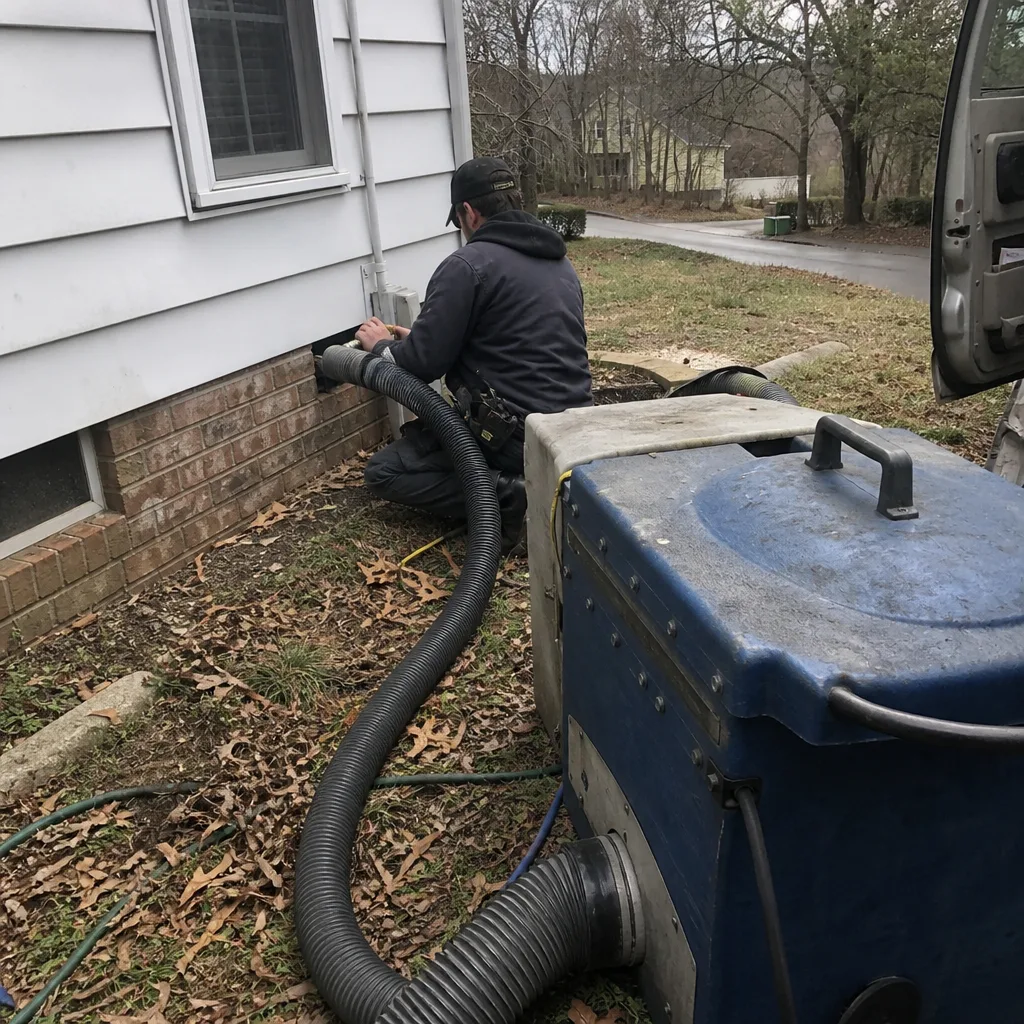 Before
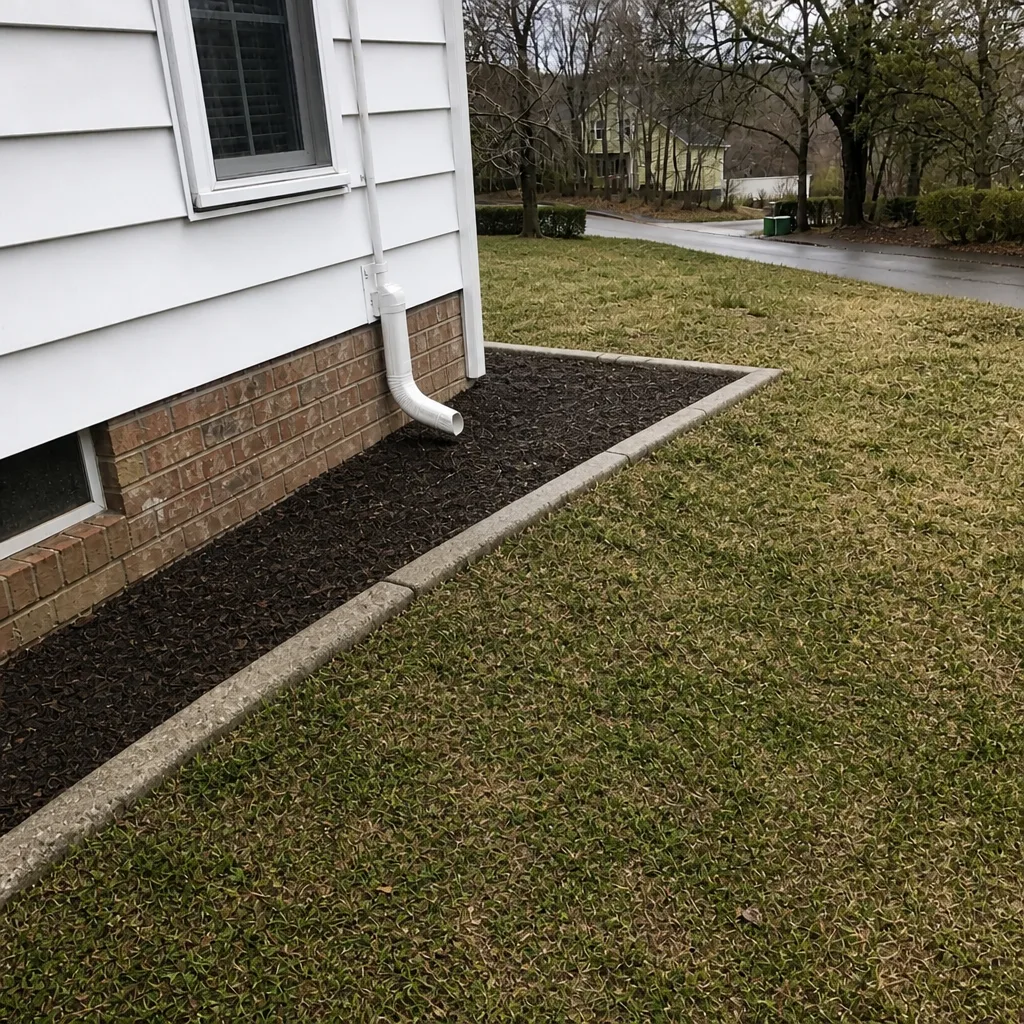 After
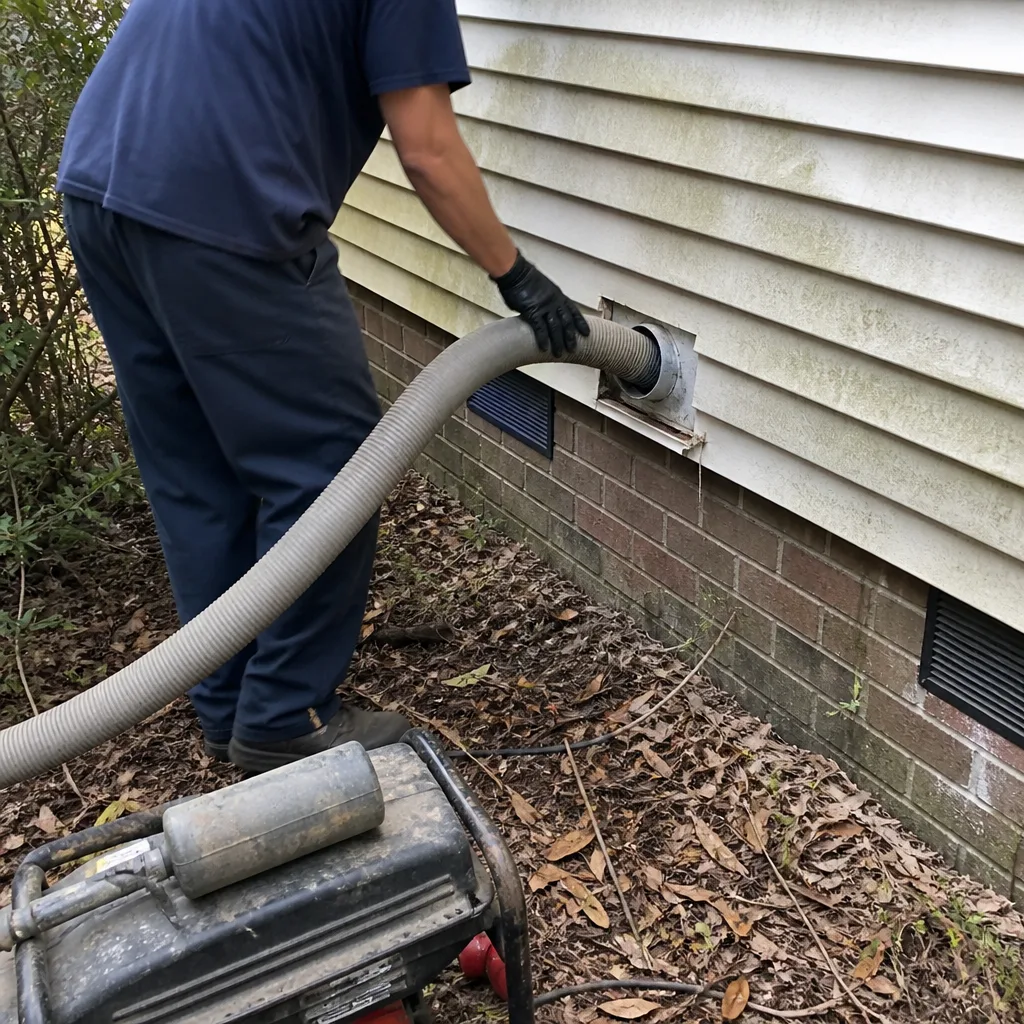 Before
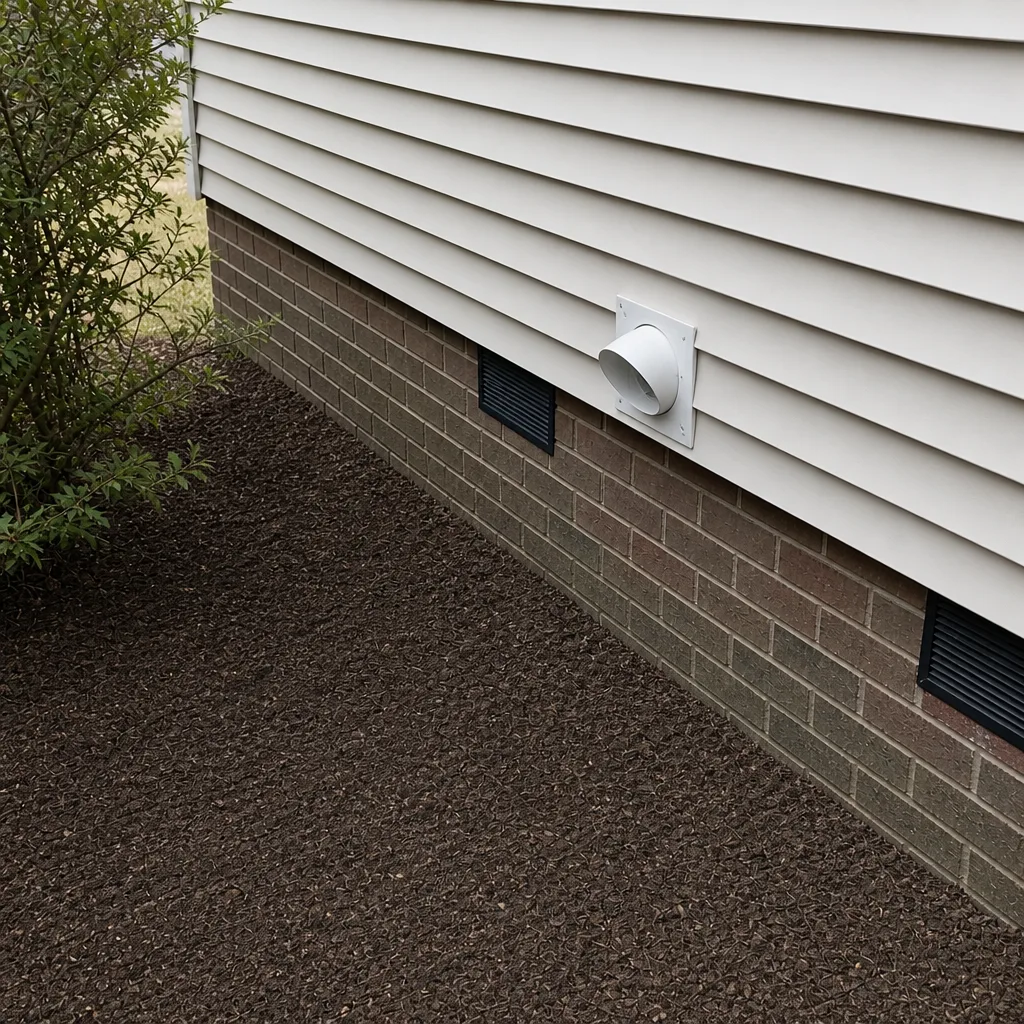 After
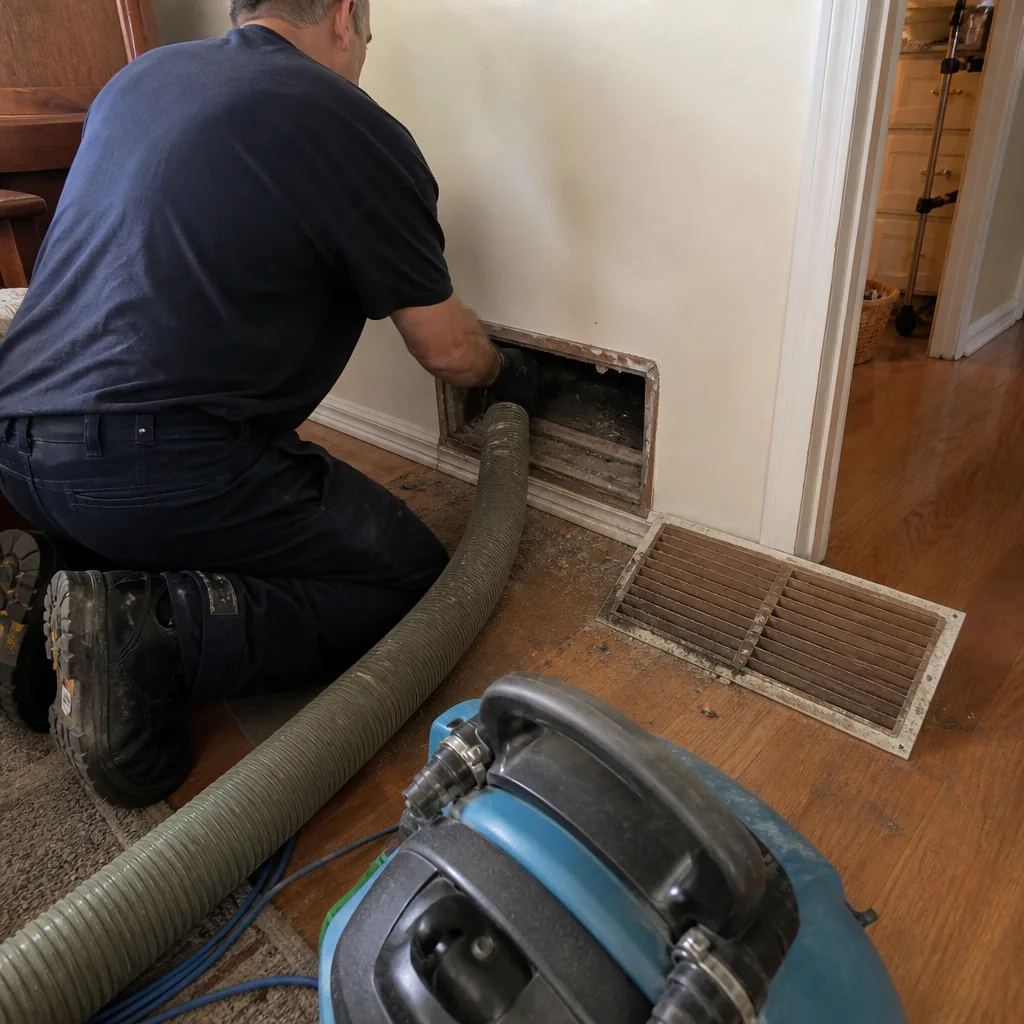 Before
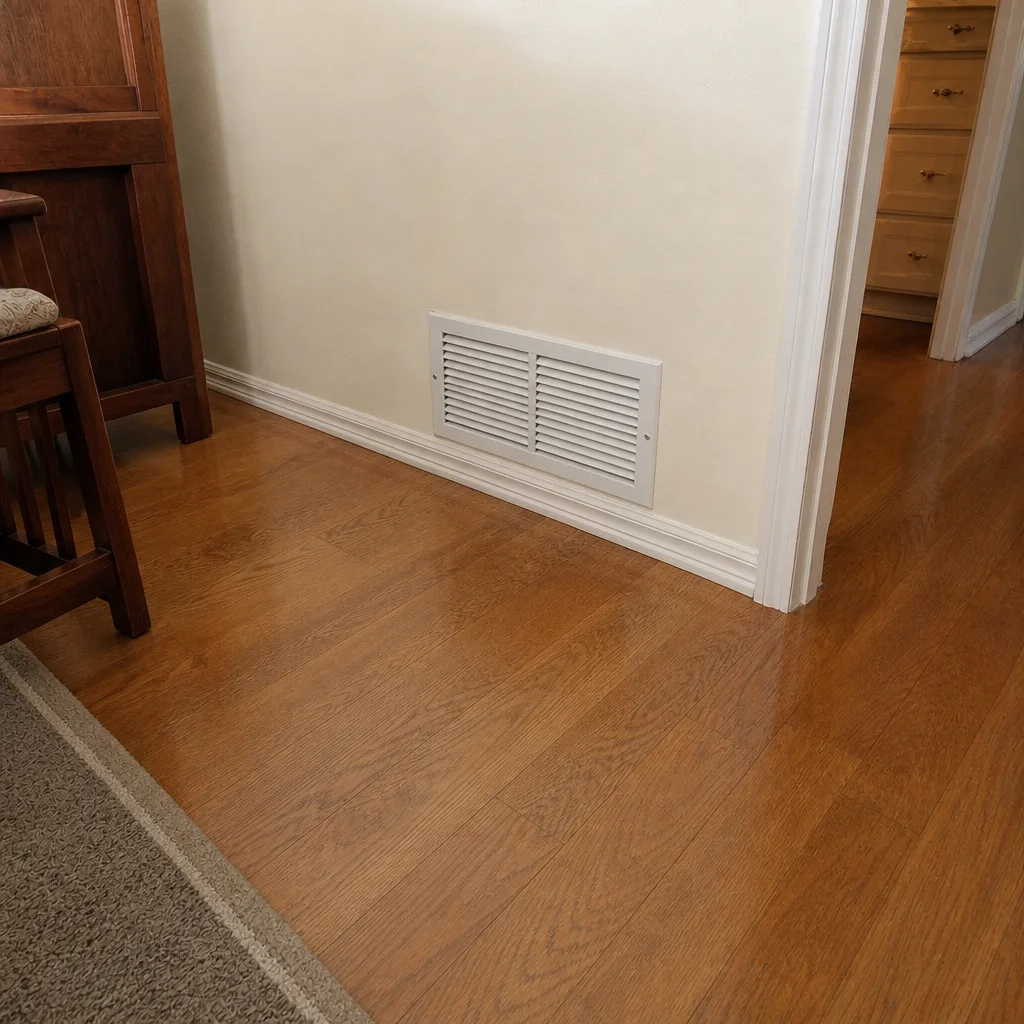 After
When to Call a Professional
Call a professional when the sign points to an active source, not just a surface. Musty odor on startup, damp streaking around a register, a room that has lost airflow entirely, visible biological growth on any accessible system component, or a bill increase combined with persistent comfort complaints all warrant an inspection. Homes with asthma, allergies, or an infant lower that threshold further, since the practical concern is what’s being recirculated through occupied rooms. If you’re not sure which category a sign falls into, bring the walkthrough notes from this guide to the call. Wilmington Duct Cleaning offers free estimates in Wilmington. Call (855) 360-7068.
Frequently Asked Questions
A musty or earthy odor that appears within a minute or two of the system starting and fades shortly after is the clearest sign that points to an active issue rather than surface dust. That pattern usually means biological growth or a moisture source somewhere in the system. Call (855) 360-7068 for an exact quote. Estimates are free.
Pricing depends on the size of the system, the number of runs, and whether repairs are needed. We quote a flat price per system agreed before work starts, based on a written estimate, so there’s no per-vent charge and no surprise increase once the work begins. Call (855) 360-7068 to schedule a free estimate.
Not necessarily, but it’s a moisture signal worth checking. In this climate the pattern often traces to moisture intrusion at the boot where condensation forms and wicks into dust and drywall paper. Whether biological growth is present requires an inspection. Call (855) 360-7068 to have it evaluated.
There’s no universal schedule. Many homes go several years between cleanings, while homes with pets, recent renovations, or a diagnosed moisture issue need more frequent evaluation. The signs in this guide are more reliable than a fixed calendar. Call (855) 360-7068 for a free estimate.
Not reliably. A room that cools poorly could be a collapsed flex section, a disconnected trunk joint, a closed damper, or an HVAC issue. A camera inspection and static pressure reading are what separate them. Call (855) 360-7068 to schedule a diagnostic estimate.
They need separate service, and they carry a different risk. Lint accumulates in the vent line and is a documented fire hazard, not just an efficiency concern. The same visit can address both when scheduled together. Call (855) 360-7068 for a free estimate.
The Bottom Line
The value of this guide isn’t a list of symptoms you can memorize. It’s the link between each sign and the mechanism behind it. Surface dust is a filtration issue you can monitor. Startup odor is a producing source that needs evaluation. Dry streaking is cosmetic. Damp streaking at the boot is a moisture problem. Uneven temperatures can be a collapsed duct, a disconnected joint, or the HVAC, and only an inspection will tell you which. Read your utility bills against runtime, not just the dollar figure. Then use the decision matrix to sort what calls for action now from what calls for watching. The signs that matter most are the ones with a source that keeps producing.
If you’re in Wilmington and any of this sounds like your home, call (855) 360-7068 for a free estimate. We answer 24/7. Fast dispatch from 7am to 7pm, Sunday through Friday.
Written by the team at Wilmington Duct Cleaning.